Table of Contents
How to Choose the Right Fuel Injectors for Your Car Build: A Practical Guide to Optimal Performance
Choosing the right fuel injectors can make or break your engine build. Whether you’re chasing quarter-mile times, building a reliable daily driver with extra punch, or creating a show-stopping dyno queen, proper injector selection directly impacts performance, reliability, and drivability. Yet despite their critical importance, fuel injectors remain one of the most misunderstood components in modern engine builds.
Here’s the reality: throwing bigger injectors at your engine won’t magically create more power. In fact, oversized injectors can hurt performance just as much as undersized ones. The key lies in understanding your engine’s actual fuel requirements, matching them with appropriate injector specifications, and ensuring your entire fuel system works in harmony.
This comprehensive guide breaks down everything you need to know about selecting fuel injectors, from basic theory to advanced calculations, helping you avoid costly mistakes and achieve optimal results.
Understanding Fuel Injectors and Their Critical Role
Before diving into selection criteria, it’s essential to understand what fuel injectors actually do and why their specifications matter so much to your engine’s performance.
What Are Fuel Injectors and How Do They Work?
Fuel injectors are precision electromagnetic valves that deliver precisely metered amounts of fuel into your engine. Unlike carburetors that rely on vacuum and mechanical metering, fuel injectors operate through rapid electrical pulses from the engine control unit (ECU), opening and closing thousands of times per minute.
Modern fuel injectors consist of several key components:
- Electromagnetic solenoid: Opens the valve when energized
- Pintle and seat: Creates the seal and controls flow
- Spray nozzle: Determines fuel atomization pattern
- Filter basket: Prevents contaminants from clogging the nozzle
- Electrical connector: Receives signals from the ECU
When the ECU sends a pulse, the solenoid energizes, lifting the pintle off its seat. Fuel under pressure (typically 43.5-60 PSI in most systems) sprays through the nozzle in a carefully designed pattern. The pulse width—how long the injector stays open—determines the amount of fuel delivered.
This electronic control enables incredible precision. Modern injectors can operate with pulse widths as short as 1-2 milliseconds, adjusting fuel delivery in real-time based on dozens of sensor inputs. This precision is why fuel-injected engines offer better economy, lower emissions, and more consistent performance than carbureted engines.
How Fuel Injectors Directly Impact Engine Performance
The relationship between injectors and performance is straightforward yet critical. Injectors must deliver exactly the right amount of fuel to match the air entering your engine. Too little fuel creates a lean condition—potentially catastrophic under load. Too much fuel wastes power, hurts economy, and can wash oil from cylinder walls.
Consider what happens at different operating conditions:
At idle and light cruise: Small, precise fuel delivery is crucial. Oversized injectors struggle here, potentially causing rough idle, poor emissions, and terrible fuel economy. The injector might need to open for such a short time that it can’t maintain consistency.
Under acceleration: Fuel demand increases dramatically. Injectors must transition smoothly from minimal to maximum flow without hesitation or lean spots that cause stumbling.
At wide-open throttle: Maximum fuel flow is required. Undersized injectors hit their flow limit, causing dangerous lean conditions that can melt pistons or burn valves. This is where proper sizing becomes critical for performance and engine survival.
During cold starts: Fuel doesn’t vaporize well when cold, requiring extra fuel for starting and warm-up. Injectors must deliver this enrichment while maintaining smooth operation.
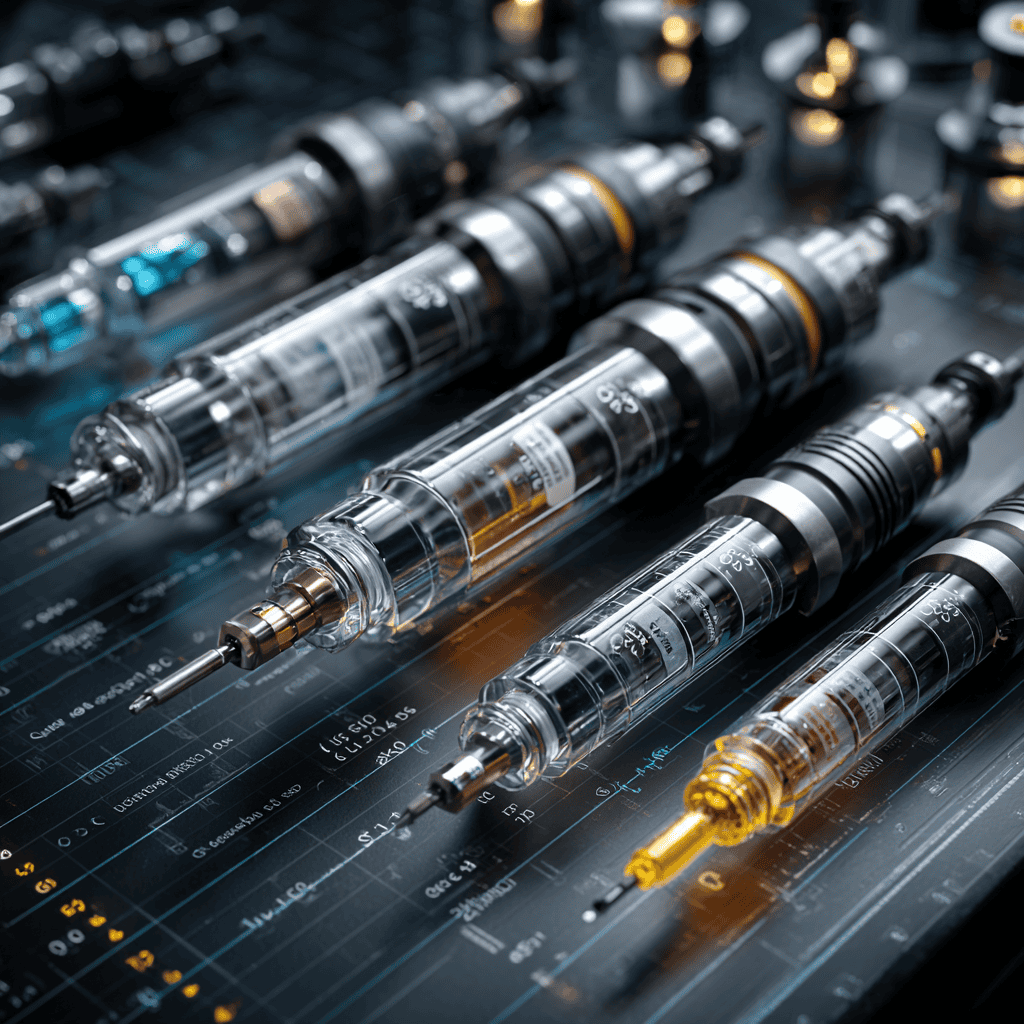
Types of Fuel Injectors: Port vs. Direct Injection
The two primary injection strategies each have distinct characteristics that affect injector selection:
Port Fuel Injection (PFI): Port injectors spray fuel into the intake manifold, where it mixes with incoming air before entering the combustion chamber. This remains the most common system for performance builds due to:
- Lower system cost and complexity
- Excellent fuel atomization and mixing
- Proven reliability and tunability
- Wide selection of aftermarket options
- Operating pressures of 30-80 PSI
Port injectors typically mount in the intake manifold with their tips aimed at the intake valves. The fuel spray helps cool intake valves and provides excellent mixture preparation time.
Direct Injection (DI): Direct injection systems spray fuel directly into the combustion chamber at extremely high pressure (500-3000+ PSI). Benefits include:
- Precise fuel control for better economy
- Charge cooling effect increases knock resistance
- Enables stratified charge operation
- Higher compression ratios possible
However, DI systems present challenges for modifications:
- Limited aftermarket injector options
- Expensive high-pressure pumps required
- Carbon buildup on intake valves (no fuel wash)
- Complex tuning requirements
Many modern performance builds combine both systems (dual injection), using port injectors for additional fuel delivery while retaining factory direct injection for emissions and economy.
Key Injector Specifications Explained
Understanding injector specifications is crucial for proper selection:
Flow Rate: Measured in cc/min (cubic centimeters per minute) or lb/hr (pounds per hour). This indicates maximum fuel delivery at a specific pressure (usually 43.5 PSI or 3 bar). To convert between units: lb/hr × 10.5 = cc/min (approximately).
Impedance: Either high (12-16 ohms) or low (1-3 ohms). This must match your ECU’s injector drivers. Low impedance injectors flow more but require special peak-and-hold drivers or resistor boxes.
Spray Pattern: Cone angle and atomization quality affect combustion efficiency. Narrow cones work better for some intake designs, while wide patterns suit others.
Dead Time/Latency: The delay between electrical signal and actual fuel flow. This varies with voltage and affects tuning precision. Quality injectors provide dead time tables for accurate calibration.
Connector Style: EV1, EV6, EV14, Denso, etc. Must match your harness or require adapters.
Calculating Your Fuel Injector Requirements
Proper injector sizing requires understanding your engine’s fuel demands across its entire operating range. Guessing or copying someone else’s setup often leads to disappointment or engine damage.
The Fundamental Calculation
The basic formula for injector sizing:
Injector Size (lb/hr) = (Horsepower × BSFC) ÷ (Number of Injectors × Max Duty Cycle)
Let’s break down each component:
Horsepower: Your target wheel or flywheel horsepower. Be realistic but include a safety margin for future modifications.
BSFC (Brake Specific Fuel Consumption): How much fuel your engine consumes per horsepower per hour. Typical values:
- Naturally aspirated: 0.45-0.50 lb/hr/hp
- Turbocharged: 0.55-0.65 lb/hr/hp
- Supercharged: 0.60-0.70 lb/hr/hp
- Nitrous oxide: 0.60-0.65 lb/hr/hp (not including nitrous fuel)
Number of Injectors: Usually matches cylinder count, though some builds use secondary injectors.
Maximum Duty Cycle: The percentage of time injectors stay open. Target 80-85% maximum for reliability. Running at 90-100% causes poor spray patterns, overheating, and premature failure.
Real-World Calculation Example
Let’s size injectors for a turbocharged 4-cylinder making 400 horsepower:
- Horsepower: 400 hp
- BSFC: 0.60 (turbocharged)
- Injectors: 4
- Max duty cycle: 0.85 (85%)
Calculation: (400 × 0.60) ÷ (4 × 0.85) = 240 ÷ 3.4 = 70.6 lb/hr
You’d want at least 750cc/min injectors (70.6 × 10.5 = 741cc), though stepping up to 800cc or 1000cc provides headroom for future modifications.
Accounting for Fuel Type Differences
Different fuels require dramatically different injector sizing:
E85 Ethanol: Requires approximately 30-40% more fuel flow than gasoline due to lower energy density. Multiply your gasoline injector size by 1.35-1.40 for E85.
Methanol: Needs roughly twice the fuel flow of gasoline. Double your calculations for methanol-fueled engines.
Race Gas: High-octane race fuels typically have similar flow requirements to pump gas, though some oxygenated fuels need 5-10% more flow.
For flex-fuel builds, size injectors for worst-case scenario (usually E85 at maximum power) to ensure adequate fuel delivery across all fuel types.
Considering Fuel Pressure Effects
Injector flow ratings assume specific fuel pressure (usually 43.5 PSI). Actual flow changes with pressure according to this formula:
New Flow = Rated Flow × √(New Pressure ÷ Rated Pressure)
For example, a 1000cc injector rated at 43.5 PSI flows:
- At 50 PSI: 1000 × √(50÷43.5) = 1072cc
- At 60 PSI: 1000 × √(60÷43.5) = 1174cc
- At 35 PSI: 1000 × √(35÷43.5) = 897cc
Raising fuel pressure can increase injector flow, but this also affects spray pattern and atomization. It’s generally better to use properly sized injectors rather than pushing pressure extremes.
Optimizing Your Complete Fuel System
Fuel injectors are just one component in a complex system. Every element must work together to deliver consistent, adequate fuel flow under all conditions.
Selecting the Right Fuel Pump
Your fuel pump must supply enough volume at the required pressure to feed your injectors at maximum demand. Inadequate pump capacity causes pressure drop under load, leading to lean conditions.
Calculating pump requirements: Total Fuel Flow (lb/hr) = Horsepower × BSFC Required Pump Flow (lph) = Total Fuel Flow × 10.5 × 1.2 (safety factor)
For our 400hp turbo example:
- 400hp × 0.60 BSFC = 240 lb/hr
- 240 × 10.5 × 1.2 = 3024 lph or about 800 gph
Popular performance fuel pump options:
- Walbro 255lph: Good for 400-500hp on gasoline
- AEM 340lph: Supports 600-700hp
- Aeromotive Eliminator: Flows 800+ gph for serious builds
- Dual pump setups: For extreme horsepower applications
Consider pump placement—in-tank pumps stay cool and quiet but require tank modification. External pumps offer easy service but create more noise and heat.
Fuel Rails and Distribution
Stock fuel rails often become restrictions in high-horsepower builds. Upgraded rails provide:
- Larger internal diameter for better flow
- Additional injector bosses for secondary injectors
- Ports for fuel pressure gauges and regulators
- Better injector mounting and sealing
Fuel line sizing matters too:
- -6 AN (3/8″): Adequate for most 400-600hp builds
- -8 AN (1/2″): Recommended for 600-900hp
- -10 AN or larger: Required for 1000+ hp applications
Use proper high-pressure fuel hose rated for your fuel type. Standard rubber hose deteriorates with ethanol and can’t handle EFI pressures.
Fuel Pressure Regulation Strategies
Consistent fuel pressure is critical for predictable injector flow. Two main approaches:
Return-Style Systems: A bypass regulator maintains constant pressure by returning excess fuel to the tank. Benefits include:
- Consistent pressure regardless of demand
- Cooler fuel (constantly circulating)
- Better for high-horsepower applications
- More complex plumbing required
Returnless Systems: Regulator in tank or at pump maintains pressure without return line. Common in modern vehicles but less ideal for modifications:
- Simpler installation
- Fuel can heat up under hood
- Pressure may fluctuate with demand
- Limited adjustability
Most performance builds benefit from aftermarket adjustable regulators allowing precise pressure tuning. Quality regulators from Aeromotive, Fuelab, or Radium maintain rock-solid pressure under varying conditions.
Integration with Engine Management
Your ECU must properly control your chosen injectors. Key considerations:
Injector Impedance Matching: High-impedance injectors work with most ECUs directly. Low-impedance injectors need:
- Peak-and-hold capable ECU drivers
- Resistor box (adds 10-12 ohms resistance)
- Potential rewiring for proper current handling
Calibration Data: Quality injectors include:
- Flow rate at multiple pressures
- Dead time versus voltage tables
- Spray pattern specifications
- These enable accurate ECU calibration
Sequential vs. Batch Fire: Modern ECUs fire injectors sequentially (one at a time, timed with valve events). Older or simpler systems use batch fire (multiple injectors simultaneously). Sequential offers better idle quality and emissions but requires cam position sensing.
How to Choose the Right Fuel Injectors for Your Car Build’s Specific Use Case
Different builds have unique requirements that influence injector selection beyond simple flow calculations.
Naturally Aspirated Builds
NA engines typically need smaller injectors than forced induction builds of similar power. Key considerations:
- Lower BSFC (0.45-0.50) means less fuel required
- Excellent throttle response demands good low-pulse width linearity
- High-RPM builds need fast-responding injectors
- Individual throttle bodies may require special spray patterns
For a 300hp NA build: (300 × 0.48) ÷ (4 × 0.85) = 42.4 lb/hr or about 450cc injectors
Turbocharged Applications
Turbo builds present unique challenges:
- Higher BSFC (0.55-0.65) increases fuel requirements
- Heat and boost raise fuel temperature, affecting flow
- Rapid boost onset demands quick injector response
- Anti-lag systems may require oversized injectors
Account for boost creep and consider 20% overhead for safety. Modern turbos spool so quickly that injectors must transition from cruise to full boost in milliseconds.
Supercharged Setups
Supercharged engines share similarities with turbo builds but have distinct characteristics:
- Constant boost requires consistent fuel delivery
- Heat soak can be severe, affecting fuel temperature
- Instant boost response leaves no room for fuel delivery lag
- Intercooler efficiency affects charge temperature and fuel requirements
Size injectors for worst-case scenario—hot day, heat-soaked intercooler, maximum boost.
Nitrous Oxide Systems
Nitrous adds complexity to injector selection:
- Dry systems flow nitrous only, requiring fuel system to provide extra fuel
- Wet systems add dedicated fuel nozzles but still need adequate primary injectors
- Account for both naturally aspirated and nitrous-assisted fuel requirements
- Consider staging larger injectors that activate only with nitrous
For a 150hp nitrous shot, add approximately 15 lb/hr per injector to your base requirement.
Alternative Fuel Considerations
E85/Ethanol: Size injectors 35-40% larger than gasoline requirements. Ensure all components are ethanol-compatible. Stainless steel internals resist corrosion better than standard materials.
Methanol: Requires roughly double the fuel flow of gasoline. Specialized injectors with appropriate materials are essential. Methanol’s corrosive nature demands careful component selection.
Propane/CNG: Gaseous fuels require completely different injector technology—specialized solenoid valves rather than traditional liquid injectors.
Advanced Injector Selection Considerations
Beyond basic flow requirements, several factors influence optimal injector choice.
Spray Pattern and Atomization
Spray pattern significantly affects combustion quality:
- Narrow cone (15-25°): Better for aimed port designs
- Wide cone (25-45°): Suits throttle body injection or wide ports
- Multi-hole designs: Superior atomization but more expensive
Better atomization improves:
- Combustion efficiency
- Emissions quality
- Cold start performance
- Throttle response
High-end injectors from Injector Dynamics or Bosch Motorsport use advanced multi-hole designs for exceptional atomization.
Dynamic Flow Range and Resolution
Dynamic range describes how well injectors perform across their entire operating range. Quality matters most at:
- Short pulse widths (idle, cruise)
- Transition zones (acceleration)
- Maximum flow (wide-open throttle)
Premium injectors maintain linearity from 1ms to fully static (100% duty cycle). Budget injectors often struggle below 2-3ms, causing idle and light-load issues.
Temperature Compensation
Fuel temperature affects flow rates and spray patterns. Quality injectors maintain consistent performance across temperature ranges. Consider:
- Under-hood temperatures in your application
- Fuel cooling provisions (return system, coolers)
- Hot restart characteristics
- Cold weather performance
Injector Matching and Flow Testing
Even identical model injectors vary slightly in actual flow. Matched sets are flow-tested and grouped within 1-2% variance. This ensures:
- Consistent cylinder-to-cylinder fueling
- Smoother idle
- Better emissions
- Easier tuning
While matched sets cost more, they’re worthwhile for any performance build. Some vendors offer custom flow matching to your exact specifications.
Common Mistakes to Avoid
Learning from others’ errors saves time, money, and potentially your engine.
The “Bigger Is Better” Fallacy
Massively oversized injectors create numerous problems:
- Poor idle quality from inconsistent short pulse widths
- Difficult tuning due to reduced resolution
- Increased fuel consumption
- Potential bore wash from poor atomization
- Wasted money on unnecessary capacity
Size injectors for realistic power goals with modest overhead (20-30% maximum). You can always upgrade later if needed.
Ignoring Duty Cycle Limits
Running injectors at 95-100% duty cycle seems like maximum efficiency but causes:
- Poor spray patterns affecting combustion
- Overheating leading to failure
- Inconsistent flow as injectors can’t fully close
- Reduced lifespan from constant maximum stress
Target 80-85% maximum duty cycle for reliability. This provides emergency overhead and extends injector life significantly.
Mixing Injector Types or Brands
Using mismatched injectors creates tuning nightmares:
- Different flow curves require separate calibrations
- Varied dead times cause cylinder imbalances
- Inconsistent spray patterns affect combustion
- Nearly impossible to achieve smooth operation
Always use matched sets of identical injectors. If adding secondary injectors, match their characteristics as closely as possible to primaries.
Neglecting Supporting Modifications
Installing larger injectors without addressing fuel supply creates new problems:
- Inadequate pump causes pressure drop
- Stock regulator can’t maintain pressure
- Undersized lines create restrictions
- Factory ECU can’t control different impedance
Plan complete system upgrades, not piecemeal modifications.
Skipping Professional Tuning
Even perfect injector selection requires proper calibration. Professional tuning ensures:
- Accurate injector characterization in ECU
- Proper fuel maps throughout operating range
- Safe air-fuel ratios under all conditions
- Optimized performance and economy
Budget for professional dyno tuning when upgrading injectors—it’s not optional for safety and performance.
Installation Best Practices and Troubleshooting
Proper installation prevents problems and ensures optimal performance.
Installation Guidelines
Preparation steps:
- Clean fuel rail and injector ports thoroughly
- Inspect and replace O-rings (lubricate with clean oil)
- Verify electrical connector compatibility
- Check fuel pressure before starting
Installation procedure:
- Install injectors straight into rail (no side-loading)
- Ensure full seating with even pressure
- Secure rail ensuring equal injector compression
- Connect electrical connectors fully
- Prime system and check for leaks
Post-installation checks:
- Verify fuel pressure at rail
- Check for leaks at all connections
- Confirm injector pulse with noid light or scope
- Monitor fuel trims during initial startup
Troubleshooting Common Issues
Rough idle or stumbling:
- Verify dead time calibration
- Check for vacuum leaks
- Confirm minimum pulse width capability
- Consider smaller injectors if severely oversized
Lean conditions under load:
- Verify fuel pressure under demand
- Check pump capacity
- Inspect for restricted lines or filters
- Confirm injector flow rating accuracy
Rich conditions or poor economy:
- Recalibrate injector flow in ECU
- Check for leaking injectors
- Verify fuel pressure isn’t excessive
- Consider if injectors are oversized
Check engine lights:
- Scan for specific codes
- Verify impedance compatibility
- Check wiring and connections
- Confirm ECU calibration for new injectors
Future Trends in Fuel Injection Technology
The industry continues advancing, bringing new technologies to consider:
Gasoline Direct Injection Evolution
GDI technology improves rapidly:
- Higher pressures (up to 5000 PSI) for better atomization
- Multiple injection events per cycle
- Combined port/direct systems becoming common
- Aftermarket GDI upgrades emerging
Alternative Fuel Integration
Growing interest in renewable fuels drives injector development:
- Dedicated ethanol injectors with specialized materials
- Hydrogen injection systems for combustion engines
- Variable fuel composition sensors and adaptive tuning
- Bio-diesel compatible designs for diesel applications
Smart Injector Technology
Next-generation injectors may include:
- Built-in flow sensors for closed-loop control
- Temperature compensation circuits
- Self-diagnostic capabilities
- Wireless calibration and monitoring
Conclusion: Making the Right Choice for Your Build
Selecting the right fuel injectors requires balancing multiple factors—power requirements, fuel type, supporting modifications, and budget. The perfect injector for one build might be completely wrong for another, even with similar power levels.
Start by accurately calculating your fuel requirements, accounting for realistic power goals and appropriate safety margins. Consider your entire fuel system as an integrated whole, ensuring every component can support your injectors’ demands. Don’t forget about tuning—even the best injectors need proper calibration to perform optimally.
Whether building a street car with mild modifications or an all-out race machine, taking time to properly select and install fuel injectors pays dividends in performance, reliability, and drivability. The relatively small investment in quality injectors and professional tuning prevents expensive engine damage while unlocking your build’s true potential.
Remember that fuel injector technology continues advancing rapidly. What seems impossible today may be commonplace tomorrow. Stay informed about new developments, but don’t let analysis paralysis prevent you from building your dream machine today.
The key to success lies in careful planning, quality components, and professional installation and tuning. With the right injectors properly integrated into a well-designed fuel system, your engine will perform reliably at its full potential for years to come.
Additional Resources
- Injector Dynamics Fuel Flow Calculator – Industry-leading calculator for precise injector sizing based on your specific build parameters
- HP Academy Fuel System Design Course – Comprehensive training on complete fuel system design and optimization
- DeatschWerks Injector Application Guide – Detailed database of vehicle-specific injector recommendations and flow data