Table of Contents
How to Store a Car Battery Properly: The Complete Technical Guide for Maximum Lifespan
Introduction: The Science of Battery Storage
Proper car battery storage isn’t just about finding a shelf in your garage—it’s about understanding the chemical processes that occur within batteries during periods of inactivity and taking specific steps to minimize degradation. Whether you’re winterizing a classic car, maintaining emergency backup batteries, or storing seasonal vehicle batteries, the difference between proper and improper storage can mean years of additional service life or premature failure costing $100-300 per battery.
This comprehensive guide provides scientifically-backed storage procedures for all battery types, from traditional flooded lead-acid to modern AGM and lithium-ion systems. We’ll examine the chemical reactions that cause battery degradation, optimal storage conditions backed by manufacturer data, and specific maintenance procedures that can extend battery life by 50% or more.
Understanding Battery Chemistry and Degradation
Lead-Acid Battery Chemical Processes
The Sulfation Problem
Chemical Reaction During Discharge:
Negative plate: Pb + HSO4⁻ → PbSO4 + H+ + 2e⁻
Positive plate: PbO2 + HSO4⁻ + 3H+ + 2e⁻ → PbSO4 + 2H2O
What Happens During Storage:
- Self-discharge rate: 3-20% per month depending on temperature
- Sulfate crystal formation: Begins within 24 hours of discharge
- Crystal growth: Becomes irreversible after 2-3 weeks
- Capacity loss: 5% permanent loss per sulfation cycle
Temperature Impact on Self-Discharge:
| Temperature | Self-Discharge Rate | Time to 50% Discharge |
|---|---|---|
| 32°F (0°C) | 2-3% per month | 17-25 months |
| 50°F (10°C) | 3-5% per month | 10-17 months |
| 70°F (21°C) | 5-7% per month | 7-10 months |
| 90°F (32°C) | 15-20% per month | 2.5-3 months |
| 110°F (43°C) | 25-30% per month | 1.5-2 months |
AGM and Gel Cell Differences
AGM (Absorbed Glass Mat) Advantages:
- Lower self-discharge: 1-3% per month
- No stratification: Electrolyte absorbed in mat
- Position flexible: Can be stored at any angle
- Vibration resistant: 5x more than flooded
Gel Cell Characteristics:
- Self-discharge: 1-2% per month
- Temperature sensitive: Charging voltage critical
- Deep cycle capable: 500-1,200 cycles typical
- No maintenance: Sealed construction
Lithium-Ion Battery Storage Considerations
Lithium Degradation Mechanisms:
- Calendar aging: 2-3% capacity loss per year at 25°C
- SEI layer growth: Solid Electrolyte Interface thickening
- Lithium plating: Occurs at high charge levels
- Electrolyte decomposition: Accelerated above 60% SOC
Optimal Storage State of Charge:
Capacity retention after 1 year at 25°C:
100% SOC: 80-85% capacity retained
80% SOC: 85-90% capacity retained
60% SOC: 88-92% capacity retained
40% SOC: 94-96% capacity retained (optimal)
20% SOC: 92-94% capacity retained
0% SOC: Permanent damage likely
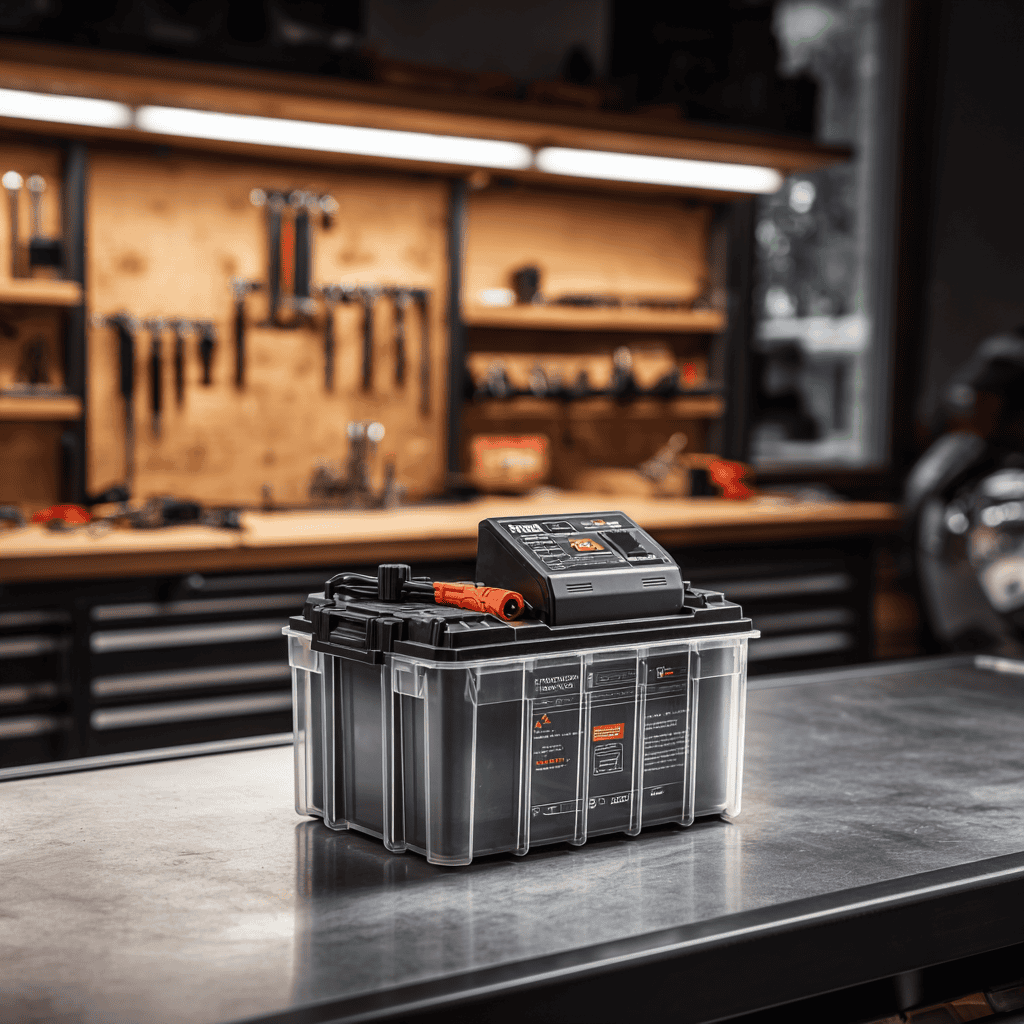
Comprehensive Storage Procedures by Battery Type
Flooded Lead-Acid Battery Storage
Pre-Storage Preparation
Step 1: Full Charge Cycle
- Charge at C/10 rate (10A for 100Ah battery)
- Continue until specific gravity: 1.265-1.280
- Equalization charge: 15.5-16V for 2-4 hours
- Cool down period: 2-4 hours minimum
Step 2: Physical Inspection
- Check electrolyte levels: 1/2″ above plates
- Add distilled water: If needed (never acid)
- Inspect for cracks: Replace if damaged
- Clean terminals: Baking soda solution
Step 3: Terminal Protection
Materials needed:
- Wire brush or terminal cleaner
- Baking soda solution (1 tbsp per cup water)
- Petroleum jelly or terminal protector spray
- Clean rags
Storage Environment Setup
Ideal Conditions:
- Temperature: 50-59°F (10-15°C) optimal
- Humidity: 30-50% relative humidity
- Ventilation: Hydrogen gas dissipation required
- Surface: Wood or plastic, never concrete
Storage Container Options:
| Type | Cost | Benefits | Drawbacks |
|---|---|---|---|
| Battery Box | $15-30 | Insulated, portable | Limited size options |
| Marine Battery Box | $25-50 | Waterproof, vented | More expensive |
| DIY Wooden Box | $10-20 | Custom size, cheap | Requires construction |
| Climate Cabinet | $200+ | Temperature controlled | High cost |
AGM Battery Storage Procedures
Preparation Differences from Flooded
Charging Parameters:
- Bulk charge: 14.4-14.7V (temperature compensated)
- Float charge: 13.4-13.8V
- No equalization: Can damage AGM batteries
- Current limit: C/5 maximum (20A for 100Ah)
Storage Voltage Maintenance:
Monthly voltage checks and actions:
>12.8V: No action needed
12.6-12.8V: Optional top-up charge
12.4-12.6V: Charge recommended
12.2-12.4V: Charge required immediately
<12.2V: Risk of permanent sulfation
Lithium-Ion Storage Protocol
Optimal Storage Procedure
Step 1: Discharge to 40-50% SOC
- Use built-in BMS indicators
- Or measure voltage (3.7-3.8V per cell)
- Never store fully charged or discharged
Step 2: Temperature Control
- Ideal: 59-68°F (15-20°C)
- Acceptable: 32-77°F (0-25°C)
- Never: Below freezing or above 95°F
Step 3: Periodic Cycling
- Every 6 months: Charge to 80%, discharge to 40%
- Prevents voltage depression
- Maintains BMS calibration
Advanced Storage Techniques and Equipment
Battery Maintainer Selection Guide
Types of Maintainers
Smart Chargers/Maintainers:
| Feature | Basic ($25-50) | Mid-Range ($50-100) | Premium ($100-200) |
|---|---|---|---|
| Amperage | 0.75-1.5A | 1.5-5A | 5-15A |
| Battery Types | Lead-acid only | Lead-acid, AGM | All types including lithium |
| Modes | Float only | 4-6 stage | 8+ stage with repair |
| Diagnostics | LED indicators | Basic display | Digital display with data |
| Weather Rating | Indoor only | Weather resistant | Fully weatherproof |
| Warranty | 1 year | 3 years | 5 years+ |
Recommended Models by Use:
Budget Option: Battery Tender Junior
- Output: 0.75A
- Price: $25-35
- Best for: Single battery, indoor use
- Limitation: Slow for large batteries
Best Overall: NOCO GENIUS5
- Output: 5A
- Price: $70-80
- Features: Force mode, repair function
- Compatibility: All battery types
Professional: CTEK MXS 10
- Output: 10A
- Price: $150-180
- Features: Supply mode, AGM specific
- Use case: Multiple batteries, workshop
Temperature Compensation Calculations
Voltage Adjustment Formula:
Adjusted Voltage = Base Voltage + ((77°F - Actual Temp) × 0.003 × Cell Count)

Example for 12V battery at 50°F:
Adjusted = 14.4V + ((77-50) × 0.003 × 6)
Adjusted = 14.4V + 0.486V = 14.886V
Multi-Battery Storage Systems
Parallel Storage Considerations
For storing multiple batteries:
- Never connect different types in parallel
- Match age and capacity within 10%
- Use battery isolators to prevent cross-discharge
- Individual maintainers preferred over single unit
Rotation Schedule for Fleet Management:
Week 1-2: Batteries A, B, C on maintainers
Week 3-4: Batteries D, E, F on maintainers
Week 5-6: Return to A, B, C
Continuous rotation ensures all batteries maintained
Seasonal Storage Procedures
Winter Storage Protocol
Cold Weather Preparation
Temperature-Based Storage Decisions:
| Average Temp | Storage Location | Special Requirements |
|---|---|---|
| Above 32°F | Can leave in vehicle | Disconnect negative terminal |
| 20-32°F | Preferably remove | Insulated storage recommended |
| 0-20°F | Must remove | Indoor storage required |
| Below 0°F | Must remove | Climate-controlled essential |
Freezing Point by State of Charge:
100% Charged (1.265 SG): -77°F (-60°C)
75% Charged (1.225 SG): -35°F (-37°C)
50% Charged (1.190 SG): -10°F (-23°C)
25% Charged (1.155 SG): 5°F (-15°C)
Discharged (1.120 SG): 19°F (-7°C)
Summer Storage Considerations
High Temperature Mitigation:
- Ventilation required: 5 air changes per hour minimum
- Insulation: R-13 or better for storage areas
- Active cooling: Above 90°F ambient
- Increased maintenance: Check every 2 weeks
Water Loss Calculations:
Monthly water loss at various temperatures:
70°F: 0.5-1% of capacity
90°F: 2-3% of capacity
110°F: 4-6% of capacity

100Ah battery at 90°F loses ~60ml/month
Troubleshooting Storage Problems
Common Storage Failures and Solutions
Problem: Sulfation After Storage
Symptoms:
- Voltage reads 12.6V+ but won’t accept charge
- Specific gravity remains low
- White crystals visible on plates
Recovery Procedure:
- Pulse charging: 15-minute cycles at 15V
- Desulfation mode: If charger equipped
- Equalization charge: 16V for 4-8 hours
- Load test: After recovery attempt
- Success rate: 60-70% for mild sulfation
Problem: Stratification in Flooded Batteries
Detection:
- Top cells show higher specific gravity
- Bottom cells show lower readings
- Difference >0.030 indicates problem
Solution:
- Equalization charge at 15.5-16V
- Gentle agitation if possible
- Extended low-current charging
Battery Testing After Storage
Comprehensive Testing Protocol
Step 1: Visual and Voltage Check
Tools needed: Digital multimeter, hydrometer (flooded only)

Open Circuit Voltage Test:
12.6V+ = Good
12.4-12.6V = Marginal
12.2-12.4V = Needs charging
<12.2V = Possibly damaged
Step 2: Load Testing
Procedure:
1. Ensure battery fully charged
2. Apply load equal to 3× CCA rating ÷ 2
3. Maintain for 15 seconds
4. Voltage should stay above 9.6V at 70°F

Temperature compensation:
Add 0.1V for every 10°F below 70°F
Step 3: Conductance Testing
- More accurate than load testing
- Non-invasive measurement
- Provides CCA rating estimate
- Detects internal shorts
Cost-Benefit Analysis of Proper Storage
Financial Impact of Storage Methods
Scenario Comparison (100Ah battery, $150 replacement):
| Storage Method | Annual Cost | Battery Life | 10-Year Cost |
|---|---|---|---|
| No maintenance | $0 | 2-3 years | $600-750 |
| Basic maintenance | $30 | 4-5 years | $450-550 |
| Smart maintainer | $50 initial | 6-8 years | $250-350 |
| Climate controlled | $100/year | 8-10 years | $1,150-1,300 |
ROI Calculation:
Smart Maintainer Investment:
Cost: $75 (one-time)
Battery life extension: 3 years average
Savings: $150 (one battery replacement)
ROI: 200% over battery lifetime
Environmental and Safety Considerations
Proper Ventilation Requirements
Hydrogen Gas Production:
- Charging produces 0.42L H₂ per Ah overcharged
- Explosive concentration: 4-75% in air
- Minimum ventilation: Q = 0.06 × n × I (CFM) Where n = cells, I = charging current
Safety Equipment:
- Eye protection mandatory
- Acid-resistant gloves
- Ventilation fan if enclosed space
- Fire extinguisher (Class B/C)
- Neutralizing agent (baking soda)
Disposal and Recycling
Legal Requirements:
- Batteries contain lead and acid (hazardous waste)
- Illegal to dispose in regular trash
- Most states require retailer take-back
- Recycling rate: 99% for lead-acid batteries
Recycling Locations:
- Auto parts stores (often free)
- Scrap metal dealers (may pay $5-20)
- Municipal hazardous waste facilities
- Battery manufacturers
Advanced Monitoring and Automation
Smart Storage Solutions
IoT Battery Monitoring
Wireless Monitoring Systems:
- Bluetooth monitors: $30-50 per battery
- WiFi systems: $100-200 for multiple batteries
- Parameters tracked: Voltage, temperature, current
- Alerts: Phone notifications for problems
Data Logging Benefits:
- Track discharge rates over time
- Identify temperature correlations
- Predict replacement timing
- Optimize maintenance schedules
Professional Storage Facilities
When to Consider Professional Storage:
- Collection of valuable/classic car batteries
- Extended storage (>1 year)
- No suitable storage space
- Multiple vehicle batteries
Cost Comparison:
- DIY storage: $50-100 setup + $20/year maintenance
- Professional storage: $10-30/month per battery
- Includes climate control and monitoring
- Insurance often included
Conclusion: Maximizing Battery Investment Through Proper Storage
Proper battery storage is a critical yet often overlooked aspect of vehicle maintenance that can double or triple battery lifespan. By understanding the chemical processes involved, maintaining optimal charge levels (40-50% for lithium, 50-60% for lead-acid), controlling temperature (50-70°F ideal), and using appropriate maintenance charging, you can prevent the primary causes of battery degradation during storage.
The investment in proper storage equipment—whether a $30 basic maintainer or a $150 smart charger—pays for itself by preventing just one premature battery replacement. For those storing multiple batteries or valuable vehicles, the savings compound significantly.
Essential Storage Checklist:
- Clean and inspect battery before storage
- Charge to appropriate level (varies by type)
- Store at optimal temperature (50-70°F)
- Use maintainer for periods over 30 days
- Check monthly even with maintainer
- Test thoroughly before returning to service
- Document maintenance for warranty claims
Remember that battery storage isn’t just about preservation—it’s about being ready when you need that stored vehicle or backup battery. A properly stored battery ensures reliable starting power and optimal performance when returned to service, eliminating the frustration and expense of unexpected failures.
Whether storing a single battery for winter or managing a fleet of seasonal vehicles, these evidence-based procedures ensure maximum battery life and reliability while minimizing long-term costs.