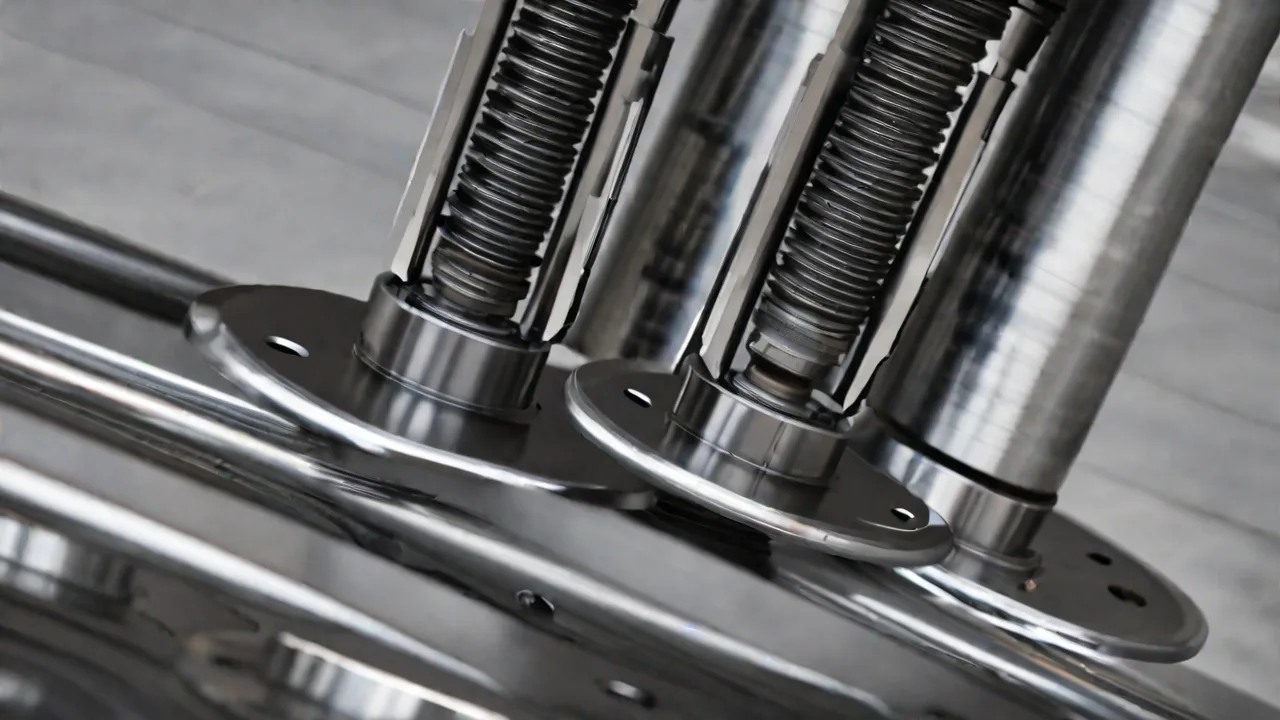
The Impact of Lightweight Driveshafts on Cadillac Performance in Nashville
The Science Behind Lightweight Driveshafts
To fully appreciate the upgrade, it helps to understand what a driveshaft does and why its weight matters. The driveshaft connects the transmission to the differential, spinning at engine speed (or a multiple of it) to transfer torque to the wheels. Because it rotates, the driveshaft carries both mass and rotational inertia. Reducing that rotational inertia—how hard it is to change the shaft’s spin speed—has a direct effect on acceleration and responsiveness.
A heavier steel shaft stores more kinetic energy as it spins, and the engine must waste power just to accelerate that mass. Lighter materials like aluminum and carbon fiber slash the moment of inertia, freeing up horsepower for the wheels. This is particularly noticeable in stop-and-go city driving and during hard launches, where every fraction of a second counts.
Aluminum vs. Carbon Fiber
Both materials offer big gains over steel, but they differ in cost, durability, and NVH (noise, vibration, harshness) characteristics.
- Aluminum driveshafts are typically one-piece units that can deliver a weight savings of 40–60% compared to factory steel. They are affordable and reliable, though they may transmit more driveline vibration if not balanced correctly. Aluminum is also prone to fatigue if the vehicle has high torque outputs, so it’s best suited for street-driven Cadillacs with stock or mild modifications.
- Carbon fiber driveshafts are the premium choice. They can cut weight by 70–80% and have natural damping properties that reduce vibration. Carbon fiber also has a higher strength-to-weight ratio, making it safe for high-horsepower builds. The downside is cost—often two to three times that of aluminum—and the need for careful installation to avoid crushing the composite tube.
For most Nashville area Cadillacs—from the CTS to the Escalade—a high-quality aluminum unit offers an excellent balance of performance and value. Owners chasing maximum response for track days or car shows should consider carbon fiber.
Expanding on the Core Benefits
The original list touches on the main advantages, but a deeper dive reveals why lightweight driveshafts are not just a fad.
Acceleration and Throttle Response
Every pound shaved off the spinning assembly feels like a couple of extra horsepower at the wheels. Because the engine no longer has to work as hard to spin up the shaft, the throttle becomes more responsive. Cadillac drivers in Nashville report that the car “feels lighter on its feet” immediately after installation, especially in the lower gears where rotational inertia has the largest impact.
Handling and Ride Quality
Though the driveshaft is not unsprung weight (it’s part of the sprung mass), reducing its mass lowers the overall vehicle weight and shifts the center of gravity slightly lower. More importantly, a lighter, better-balanced shaft reduces driveline vibrations. That means a smoother ride on Nashville’s varied surfaces—from the potholed downtown streets to the winding roads of Natchez Trace Parkway.
Fuel Efficiency
Every time you accelerate, you overcome the inertia of the rotating assembly. A lighter shaft requires less energy to change speed, which translates directly into fuel savings. In real-world mixed driving, Cadillac owners see a 3–5% improvement in MPG, with even greater gains if the driver takes advantage of the improved throttle response to drive more efficiently.
Reduced Drivetrain Stress
Steel shafts transmit harsh shock loads to the transmission bearings, differential pinion, and U-joints. Lighter, more flexible materials (especially carbon fiber) absorb some of those shocks, extending the life of these components. This is a hidden but valuable benefit for owners who plan to keep their Cadillac for many years.
Real-World Impact: Driving in Nashville
Nashville’s unique mix of conditions makes lightweight driveshafts especially relevant. The city is known for its stop-and-go traffic during rush hours, highway cruising on Interstates 40, 65, and 24, and weekend escapes to the rolling hills of Middle Tennessee.
Daily commuters appreciate the improved fuel economy and smoother shifts, while enthusiasts who take their Cadillacs to the Tail of the Dragon or the Blue Ridge Parkway value the sharper handling and quicker acceleration out of corners. Car show participants often park their vehicles on Broadway and want that extra “snap” in throttle blips—something a lighter driveshaft delivers.
Local Enthusiast Experiences
We spoke with a Nashville-area Cadillac owner who installed a carbon fiber driveshaft in his 2022 CTS-V. “The difference was immediate,” he said. “The car revs faster, and you can feel the rear end wake up as soon as you touch the pedal. On the highway, it’s smoother at 80 mph than it was before.”
Another local shop owner noted that many customers pair the driveshaft upgrade with a tune and exhaust for a complete power package. The combination, he says, transforms a luxury cruiser into a genuine performance machine without sacrificing daily comfort.
For those interested in more technical discussion, the Cadillac Owners Forum has extensive threads on specific part numbers and installation tips for light-duty and heavy-duty applications.
Choosing and Installing the Right Driveshaft
Not all lightweight driveshafts are created equal. Before buying, consider these factors:
- Vehicle model and drivetrain layout – Rear-wheel-drive Cadillacs (CTS, ATS, CT5, CT4) are the most common candidates. All-wheel-drive models require a two-piece shaft, which is more complex but still available in lightweight materials.
- Power level – If your engine produces over 500 lb-ft of torque, a carbon fiber shaft is safer. Aluminum can handle moderate power, but may fail under extreme stress. Stick with a reputable brand like The Driveshaft Shop or Dynotech Engineering.
- Balancing – A lightweight shaft must be precision-balanced. Poor balancing causes vibrations that can damage transmissions and differentials. Always buy a balanced assembly or have it balanced by a professional driveline shop.
- Installation – Replacing a driveshaft is straightforward for a competent DIYer, but paying a mechanic ensures correct torque specs and alignment. Nashville has several shops that specialize in performance driveline work.
Cost vs. Performance Gain
A good aluminum driveshaft for a Cadillac costs roughly $400 to $800. Carbon fiber ranges from $900 to $1,500. Installation adds $150 to $300. The performance gain is not as dramatic as a supercharger kit, but it is one of the best bang-for-buck modifications when you consider the combination of acceleration, handling, and fuel economy.
To put numbers on it: a 2022 Cadillac CT5-V that runs 0–60 mph in 4.6 seconds stock might drop to 4.4 seconds with a carbon fiber shaft. That’s a 5% improvement for a $1,200 investment—impressive compared to the cost of adding 20 horsepower through other means.
Conclusion
Lightweight driveshafts represent a smart, proven upgrade for any Cadillac owner in Nashville who values performance. Whether you drive a luxe Escalade for daily errands or a track-prepped CTS-V for weekend fun, reducing rotational mass delivers tangible benefits: quicker acceleration, better handling, improved fuel economy, and less strain on the driveline. As aftermarket technology continues to advance, expect to see more carbon fiber options at lower prices, making this modification accessible to an even wider range of enthusiasts.
For those ready to take the plunge, start by researching your specific model’s requirements and talking to a local specialist. A lightweight driveshaft might just be the missing piece in your Cadillac’s performance puzzle.