Table of Contents
Nashville, Tennessee, stands as a beacon of American cultural heritage, celebrated worldwide for its profound musical legacy, architectural treasures, and historic landmarks that tell the story of the American South. From the iconic Ryman Auditorium to the historic Belle Meade Plantation, from the vibrant honky-tonks of Lower Broadway to the stately antebellum homes scattered throughout the city, Nashville's cultural assets represent an irreplaceable connection to our shared past. However, preserving these invaluable treasures in the face of modern climate challenges requires sophisticated, innovative approaches to environmental control that respect the integrity of historic structures while providing the protection necessary for long-term preservation.
The intersection of historic preservation and modern climate control technology represents one of the most complex challenges facing cultural institutions, museums, historic sites, and preservation organizations today. As climate patterns shift and extreme weather events become more frequent, the need for effective cooling and humidity control in historic buildings has never been more critical. Yet traditional HVAC systems often prove incompatible with the delicate materials, irreplaceable artifacts, and architectural integrity that define these spaces. Recent advancements in cooling technologies are revolutionizing how Nashville approaches the preservation of its cultural heritage, offering solutions that protect historic sites while maintaining their authenticity, aesthetic value, and structural integrity for generations to come.
Understanding the Unique Climate Control Challenges in Historic Preservation
Historic buildings present a complex array of challenges when it comes to implementing modern climate control systems. Unlike contemporary structures designed with HVAC infrastructure in mind, historic buildings were constructed during eras when natural ventilation, thick masonry walls, high ceilings, and strategic window placement provided the primary means of temperature regulation. These architectural features, while often beautiful and historically significant, create unique obstacles for modern preservation efforts.
The materials used in historic construction—including original plaster, aged wood, historic masonry, period wallpapers, and antique finishes—are often highly sensitive to fluctuations in temperature and humidity. Rapid changes in environmental conditions can cause irreversible damage: wood expands and contracts, leading to warping and cracking; plaster deteriorates and crumbles; metal components corrode; paint flakes and peels; and textiles become brittle or develop mold. These materials have achieved a delicate equilibrium over decades or even centuries, and disrupting that balance with inappropriate climate control can accelerate deterioration rather than prevent it.
Furthermore, many historic buildings in Nashville feature architectural elements that cannot be modified or removed without compromising their historic integrity. Original window configurations, decorative plasterwork, historic flooring, period lighting fixtures, and ornamental details all contribute to a building's character and significance. Installing conventional air conditioning systems often requires drilling through walls, running visible ductwork, installing bulky equipment, and making other modifications that can permanently alter or damage these irreplaceable features. For buildings listed on the National Register of Historic Places or subject to local preservation ordinances, such alterations may be prohibited or require extensive review and approval processes.
Nashville's specific climate adds another layer of complexity to preservation efforts. The city experiences hot, humid summers with temperatures regularly exceeding 90 degrees Fahrenheit and relative humidity levels that can reach 70 percent or higher. These conditions create an environment conducive to mold growth, pest infestation, and accelerated deterioration of organic materials. Winters, while generally mild, can still bring temperature fluctuations that stress historic materials. The seasonal variation requires climate control systems that can adapt to changing conditions while maintaining the stable environment necessary for preservation.
The Critical Importance of Environmental Stability in Cultural Preservation
Professional conservators and preservation specialists emphasize that stability is often more important than achieving specific temperature or humidity targets. Historic materials and artifacts adapt to their environment over time, and maintaining consistent conditions prevents the stress cycles that cause deterioration. Sudden temperature drops, rapid humidity changes, or frequent cycling of climate control systems can be more damaging than slightly elevated temperatures or humidity levels maintained consistently.
For museums and historic sites housing collections of artifacts, documents, textiles, or artwork, environmental control becomes even more critical. Paper-based materials, including historic documents, photographs, and books, are particularly vulnerable to humidity extremes. High humidity promotes mold growth, foxing, and paper degradation, while excessively dry conditions cause brittleness and cracking. Textiles, including historic clothing, tapestries, and upholstery, require carefully controlled environments to prevent fading, fiber degradation, and pest damage. Oil paintings can crack when subjected to temperature fluctuations, while metal artifacts corrode in humid conditions.
The challenge for Nashville's preservation community is implementing cooling technologies that provide the environmental stability necessary for preservation while respecting the historic character of the buildings themselves. This requires moving beyond one-size-fits-all HVAC solutions and embracing innovative approaches tailored to the specific needs of each historic property.
Displacement Ventilation Systems: A Gentle Approach to Climate Control
Displacement ventilation represents a paradigm shift in how we think about cooling historic spaces. Unlike conventional mixing ventilation systems that force conditioned air into a space at high velocity, creating turbulent mixing of air throughout the room, displacement ventilation works with natural convection patterns to create a more gentle, stratified air distribution that proves ideal for historic preservation applications.
How Displacement Ventilation Works
The fundamental principle behind displacement ventilation is elegantly simple yet remarkably effective. Cool air is introduced at low levels in a space—typically through floor-mounted diffusers, low wall registers, or specially designed displacement outlets integrated into existing architectural features. This cool air, being denser than warm air, spreads across the floor like a slow-moving pool of water, gradually rising as it absorbs heat from occupants, equipment, lighting, and solar gain through windows.
As the air warms and becomes less dense, it naturally rises toward the ceiling, carrying with it heat, carbon dioxide, and airborne contaminants. This creates a vertical temperature gradient, with the coolest, freshest air at floor and occupant level, and warmer, stale air accumulating near the ceiling where it can be extracted through high-level return vents. The system works with natural buoyancy forces rather than fighting against them, resulting in more efficient air distribution with lower fan energy requirements.
For historic buildings, this approach offers several compelling advantages. The low-velocity air introduction minimizes drafts and air movement that could disturb delicate artifacts, historic documents, or decorative elements. The gentle air circulation reduces the risk of stirring up dust and particulates that have settled on surfaces, which is particularly important in spaces with historic finishes or collections. The stratified air distribution means that cooling is concentrated where people and artifacts are located, rather than wasting energy cooling the entire volume of a space, including high ceiling areas that may be largely unoccupied.
Implementation in Nashville's Historic Spaces
Several Nashville historic preservation projects have successfully integrated displacement ventilation systems with minimal visual impact on historic interiors. In buildings with raised floors or accessible crawl spaces, supply diffusers can be installed in floor registers that match or complement existing historic flooring patterns. For buildings with original wood flooring that cannot be disturbed, low-profile wall-mounted displacement outlets can be integrated into baseboards or wainscoting, often disguised to match existing architectural details.
The high ceilings common in historic buildings—often 12 to 16 feet or higher—actually enhance the effectiveness of displacement ventilation by providing ample space for thermal stratification to develop. Return air grilles can often be integrated into existing ceiling features, crown molding, or upper wall areas where they remain unobtrusive. In some cases, historic buildings with decorative ceiling medallions or ventilation features originally designed for natural ventilation can be adapted to serve as return air pathways, maintaining the building's historic appearance while serving modern climate control needs.
The reduced air velocities required for displacement ventilation also mean that ductwork can be smaller in cross-section than conventional systems, making it easier to route through existing wall cavities, attic spaces, or other concealed areas without major structural modifications. This is particularly valuable in historic buildings where preserving original wall surfaces, decorative plasterwork, and architectural details is paramount.
Energy Efficiency and Operational Benefits
Beyond preservation benefits, displacement ventilation systems offer significant energy advantages that align with sustainability goals increasingly important to preservation organizations and cultural institutions. Because the system delivers cooling directly to occupied zones rather than mixing it throughout the entire space, supply air temperatures can be higher than in conventional systems—typically 63-68°F compared to 55-60°F for mixing systems. This higher supply temperature reduces the energy required for cooling and dehumidification, and in some cases allows for more hours of economizer operation using outside air when conditions permit.
The lower fan energy requirements of displacement systems—resulting from reduced air velocities and lower pressure drops—can reduce HVAC energy consumption by 20-30 percent compared to conventional systems. For historic buildings that often have limited electrical capacity and where upgrading electrical infrastructure can be costly and disruptive, this reduced energy demand is particularly valuable. The quieter operation of low-velocity systems also enhances the visitor experience in museums, historic homes, and cultural venues where ambient noise levels impact the ability to appreciate exhibits, performances, or architectural features.
Thermal Energy Storage: Shifting Cooling Loads and Reducing Infrastructure Impact
Thermal energy storage, particularly ice-based systems, represents another innovative approach that offers unique advantages for historic preservation projects in Nashville. These systems fundamentally change when cooling is produced, allowing preservation sites to minimize the size and impact of cooling equipment while reducing operating costs and improving grid sustainability.
The Principles of Thermal Ice Storage
Thermal ice storage systems operate on a simple but powerful concept: produce cooling energy when it's least expensive and most efficient, then store it for use when it's needed most. During nighttime hours when electricity rates are lower, outdoor temperatures are cooler, and electrical demand is reduced, chillers operate to freeze water in specially designed storage tanks. This ice then serves as a thermal battery, storing cooling capacity that can be drawn upon during the following day.
When cooling is needed during occupied hours, chilled water is circulated through the ice storage tanks, where it absorbs cooling from the melting ice. This chilled water then circulates through the building's cooling distribution system—whether that's traditional air handlers, radiant cooling panels, or other delivery methods—providing the temperature control necessary for preservation and occupant comfort. The system can be designed for full storage, where all daytime cooling comes from stored ice, or partial storage, where the ice storage supplements conventional chilling equipment during peak demand periods.
For historic preservation applications, the ability to locate ice storage tanks remotely from the historic building itself offers tremendous advantages. Storage tanks can be placed in separate utility buildings, underground vaults, or other locations where they don't impact the historic structure's appearance or integrity. This separation allows preservation projects to minimize the mechanical equipment footprint within historic buildings, reducing the modifications necessary to accommodate climate control infrastructure.
Advantages for Historic Buildings and Cultural Institutions
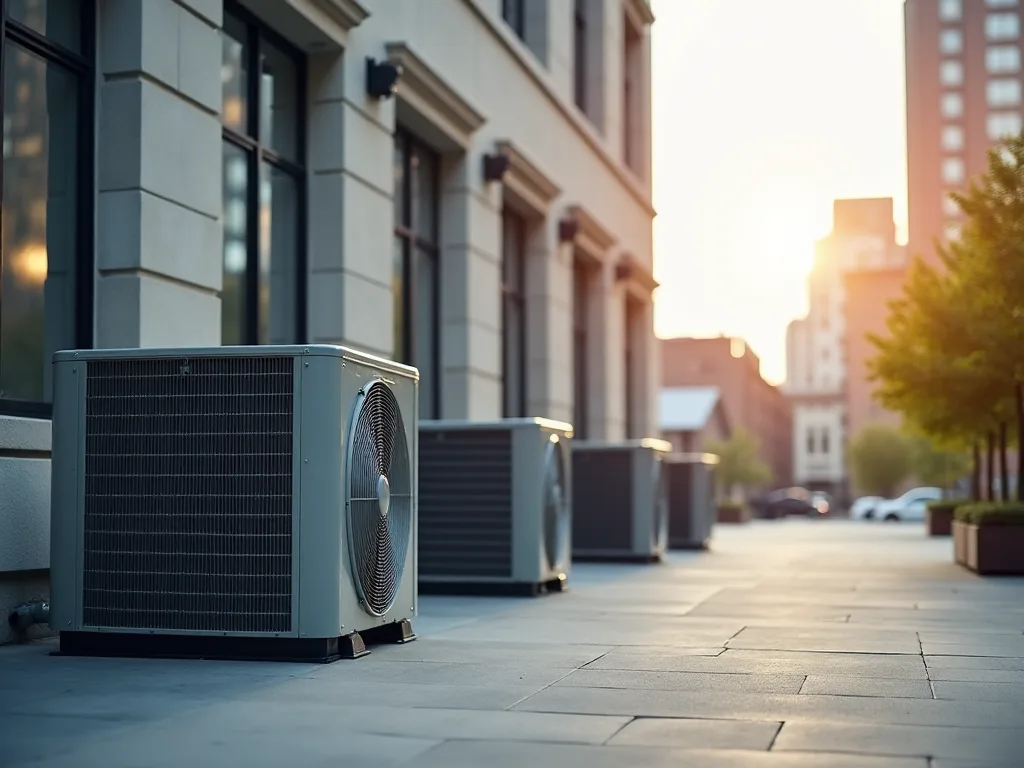
The benefits of thermal storage for historic preservation extend beyond simple load shifting. Because ice storage systems can meet peak cooling demands by drawing on stored capacity, the actual chilling equipment can be significantly smaller than would be required for a conventional system designed to meet peak loads. Smaller chillers mean less space required for mechanical rooms, reduced structural loads on historic buildings, lower noise and vibration impacts, and less visual intrusion from cooling towers or outdoor condensing units.
For Nashville's historic sites that may have limited space for mechanical equipment or where adding large rooftop units would compromise the building's historic appearance, this size reduction is invaluable. A thermal storage system might require only 40-60 percent of the chiller capacity of a conventional system, allowing equipment to be accommodated in existing basement spaces, small mechanical rooms, or discrete outdoor locations without the need for major building modifications or additions.
The operational characteristics of ice storage systems also align well with the usage patterns of many cultural institutions and historic sites. Museums, historic homes, and cultural venues often have predictable schedules with defined operating hours. Ice can be generated overnight when the facility is closed, then used to maintain optimal preservation conditions during public hours. This scheduling flexibility allows preservation staff to optimize system operation for both artifact preservation and visitor comfort without compromise.
Additionally, ice storage systems provide valuable redundancy and backup capacity. If chilling equipment experiences a failure during operating hours, the stored ice can continue providing cooling while repairs are made, preventing the rapid temperature and humidity swings that could damage collections. This resilience is particularly important for institutions housing irreplaceable artifacts or materials that cannot tolerate environmental disruptions.
Economic and Environmental Considerations
The economic case for thermal storage in preservation applications is compelling. By shifting cooling production to off-peak hours, facilities can take advantage of time-of-use electricity rates that may be 40-60 percent lower than peak rates. For cultural institutions and preservation organizations operating on limited budgets, these energy cost savings can be substantial—often sufficient to offset the additional capital cost of storage tanks within 5-10 years of operation.
Operating chillers at night also improves their efficiency. Cooler nighttime temperatures mean that cooling towers and air-cooled condensers can reject heat more effectively, allowing chillers to operate at higher efficiency levels than during hot afternoon hours. This improved efficiency translates to lower energy consumption per ton of cooling produced, further reducing operating costs and environmental impact.
From a grid sustainability perspective, thermal storage helps balance electrical demand, reducing strain on the power grid during peak afternoon hours when air conditioning loads are highest. This load shifting reduces the need for utilities to operate less efficient peaking power plants and can help defer or avoid costly grid infrastructure upgrades. For preservation organizations committed to environmental stewardship, this contribution to grid stability and reduced carbon emissions aligns with broader sustainability goals.
Radiant Cooling Systems: Silent, Invisible Climate Control
Radiant cooling represents one of the most architecturally sensitive approaches to climate control in historic buildings, offering effective temperature control with virtually no visual impact and minimal modifications to historic structures. While less common than forced-air systems in the United States, radiant cooling is gaining recognition in preservation circles for its unique advantages in sensitive applications.
Understanding Radiant Cooling Technology
Radiant cooling systems work by circulating chilled water through panels, pipes, or tubing embedded in or attached to building surfaces—typically ceilings, but also walls or floors. These cooled surfaces absorb radiant heat from warmer objects and people in the space, providing cooling through thermal radiation and natural convection rather than through forced air movement. The effect is similar to the cooling sensation experienced when standing near a cold window on a winter day, but in reverse.
The key advantage for historic preservation is that radiant cooling can be nearly invisible. Ceiling-mounted radiant panels can be integrated into suspended ceiling systems in areas where such modifications are acceptable, or specially designed panels can be mounted on ceiling surfaces and finished to match historic plaster or other ceiling treatments. In buildings with accessible attic spaces, radiant tubing can be attached to the underside of ceiling materials, providing cooling with no visible equipment in occupied spaces.
Because radiant systems provide cooling through surface temperature rather than air movement, they operate silently—a significant advantage in historic buildings where the quiet ambiance contributes to the visitor experience. There are no fans, no air rushing through grilles, no mechanical noise to disrupt the contemplative atmosphere of a museum gallery or the acoustic environment of a historic performance space.
Implementation Challenges and Solutions
Radiant cooling does present specific challenges that require careful design and integration with other building systems. The primary concern is condensation: if radiant surfaces are cooled below the dew point temperature of the surrounding air, moisture will condense on those surfaces, potentially causing water damage, mold growth, and deterioration of historic materials. This risk is particularly significant in humid climates like Nashville's.
To prevent condensation, radiant cooling systems must be integrated with dedicated dehumidification systems that maintain indoor humidity levels below the threshold where condensation would occur. This typically involves a separate ventilation system that provides fresh air, removes humidity, and handles latent cooling loads, while the radiant system handles sensible cooling. The ventilation system can use displacement ventilation principles, delivering dehumidified air at low levels while the radiant surfaces provide the majority of cooling capacity.
This hybrid approach—combining radiant cooling with dedicated outdoor air systems—actually offers advantages for historic preservation. The ventilation system can be sized specifically for air quality and humidity control rather than total cooling capacity, potentially allowing for smaller ductwork and less intrusive air distribution components. The radiant system provides the bulk of cooling capacity silently and invisibly, while the ventilation system ensures proper humidity control and fresh air delivery.
Advanced control systems monitor both surface temperatures and dew point conditions continuously, adjusting radiant panel temperatures to maintain a safe margin above the dew point while maximizing cooling capacity. These controls can integrate with building automation systems to respond to changing occupancy, weather conditions, and preservation requirements, ensuring optimal performance while protecting both the building and its contents.
Desiccant Dehumidification: Addressing Nashville's Humidity Challenge
Nashville's humid climate presents one of the most significant challenges for historic preservation, as high humidity levels accelerate deterioration of organic materials, promote mold growth, and create conditions favorable to pest infestation. Traditional cooling-based dehumidification, which removes moisture by cooling air below its dew point, has limitations in preservation applications. Desiccant dehumidification offers an alternative approach that can provide superior humidity control while offering unique advantages for historic buildings.
Desiccant Technology Fundamentals
Desiccant dehumidification systems use moisture-absorbing materials—typically silica gel or molecular sieves—to remove water vapor from air through adsorption rather than condensation. Air passes through a slowly rotating wheel coated with desiccant material, which absorbs moisture from the air stream. The dried air is then delivered to the space, while a separate heated air stream regenerates the desiccant by driving off the absorbed moisture, which is exhausted outdoors.
This approach offers several advantages for historic preservation applications. Desiccant systems can achieve very low humidity levels—down to 30-40 percent relative humidity or even lower—which is difficult or impossible with conventional cooling-based dehumidification. This deep drying capability is valuable for spaces housing particularly moisture-sensitive materials or for addressing existing moisture problems in historic buildings.
Desiccant dehumidification also operates independently of temperature, allowing humidity control without overcooling spaces. In spring and fall when outdoor temperatures are moderate but humidity remains high, desiccant systems can maintain optimal preservation conditions without the excessive cooling that would be required with conventional systems. This independent control of temperature and humidity provides more precise environmental management for preservation needs.
Integration with Other Cooling Technologies
Desiccant dehumidification works particularly well in combination with other innovative cooling technologies. When paired with radiant cooling, desiccant systems handle all humidity removal, allowing radiant surfaces to operate at higher temperatures with no condensation risk. This combination provides excellent comfort and preservation conditions with minimal air movement and maximum architectural flexibility.
Desiccant systems can also enhance the performance of displacement ventilation by pre-conditioning outdoor air before it enters the space. The desiccant system removes humidity from incoming ventilation air, reducing the latent load on the cooling system and allowing more stable humidity control. This is particularly valuable in Nashville's climate, where outdoor humidity levels can remain high even during cooler months.
The heat required for desiccant regeneration can come from various sources, including natural gas, waste heat from other building systems, or solar thermal collectors. For preservation projects committed to sustainability, solar-assisted desiccant dehumidification offers the possibility of humidity control with minimal fossil fuel consumption, aligning preservation needs with environmental responsibility.
Geothermal Heat Exchange: Leveraging Earth's Stable Temperature
Geothermal heat exchange systems, also known as ground-source heat pumps, offer another innovative approach to climate control that can benefit historic preservation projects. These systems leverage the stable temperature of the earth—typically 55-60°F at depths of 10-20 feet in the Nashville area—as a heat source in winter and heat sink in summer, providing highly efficient heating and cooling with minimal visual impact on historic properties.
Geothermal System Design for Historic Sites
A geothermal system consists of three main components: a ground heat exchanger (typically buried pipe loops), a heat pump unit that transfers heat between the ground loop and the building, and a distribution system that delivers heating or cooling to interior spaces. For historic preservation applications, the key advantage is that the ground loop can be installed in areas away from the historic structure itself, minimizing impact on the building and its immediate surroundings.
Vertical ground loops, which extend 150-400 feet deep in relatively small-diameter boreholes, can be installed in areas with limited surface space, such as parking areas, service yards, or landscape areas that don't contain significant archaeological resources. Horizontal ground loops, which require more surface area but are less expensive to install, can be placed in open lawn areas or under parking lots. For historic sites with adjacent water bodies, pond loops or lake loops offer another option that requires no ground excavation at all.
The heat pump equipment itself can be located in existing mechanical spaces, basements, or separate utility buildings, with only the distribution system requiring integration into the historic structure. This flexibility in equipment placement allows preservation projects to minimize modifications to historic buildings while still benefiting from highly efficient geothermal technology.
Performance and Sustainability Benefits
Geothermal systems typically achieve cooling efficiencies 30-50 percent higher than conventional air-source heat pumps and air conditioning systems, translating to significant energy cost savings over the system's lifetime. This efficiency advantage is particularly pronounced during Nashville's hot summers, when air-source equipment struggles with high outdoor temperatures while geothermal systems continue to reject heat to the much cooler ground.
The absence of outdoor condensing units eliminates the noise, visual impact, and maintenance issues associated with conventional cooling equipment. For historic buildings where rooftop equipment or ground-level condensers would compromise architectural integrity or historic viewsheds, this is a significant advantage. Geothermal systems also have longer equipment lifespans—ground loops can last 50 years or more, while heat pump units typically last 20-25 years—reducing long-term replacement costs and disruption to historic properties.
From a sustainability perspective, geothermal systems significantly reduce carbon emissions associated with building operations. When combined with renewable electricity sources, geothermal heating and cooling can approach carbon neutrality, supporting the environmental stewardship goals increasingly important to preservation organizations and cultural institutions.
Advanced Building Automation and Environmental Monitoring
Regardless of which cooling technologies are employed, sophisticated building automation and environmental monitoring systems are essential for successful climate control in historic preservation applications. These systems provide the precise control, continuous monitoring, and data collection necessary to maintain optimal preservation conditions while maximizing energy efficiency and system performance.
Integrated Control Systems
Modern building automation systems can integrate multiple cooling technologies, ventilation systems, and dehumidification equipment into a coordinated whole that responds intelligently to changing conditions. Sensors throughout the building continuously monitor temperature, humidity, air quality, and occupancy, providing data that allows the control system to optimize equipment operation for preservation requirements, energy efficiency, and occupant comfort.
For historic buildings with varying preservation requirements in different spaces—such as a museum with both climate-controlled gallery spaces and less sensitive administrative areas—zoned control systems can maintain different environmental conditions in each area while minimizing energy waste. Advanced algorithms can predict cooling loads based on weather forecasts, occupancy schedules, and historical patterns, allowing systems to pre-cool spaces during off-peak hours or adjust operation to minimize energy costs.
Remote monitoring capabilities allow preservation staff and facility managers to track environmental conditions from anywhere, receiving alerts if conditions drift outside acceptable ranges. This real-time visibility enables rapid response to equipment failures or environmental excursions before they cause damage to collections or historic materials. Historical data logging provides documentation of environmental conditions over time, which is valuable for conservation planning, insurance purposes, and demonstrating compliance with preservation standards.
Wireless Sensor Networks
Wireless environmental monitoring technology has revolutionized the ability to track conditions in historic buildings without the need for extensive wiring that could damage historic fabric. Battery-powered wireless sensors can be placed throughout a building to monitor temperature, humidity, light levels, and other parameters, transmitting data to a central system for analysis and display. These sensors can be small and unobtrusive, often no larger than a deck of cards, allowing them to be placed discreetly in galleries, storage areas, and display cases without visual impact.
For preservation projects, wireless monitoring provides unprecedented insight into microclimates within historic buildings. Different areas may experience significantly different environmental conditions due to solar exposure, air circulation patterns, or proximity to exterior walls. Wireless sensor networks reveal these variations, allowing preservation staff to identify problem areas, optimize equipment operation, and make informed decisions about artifact placement and display conditions.
Case Studies: Innovative Cooling in Nashville's Historic Buildings
While specific implementation details of cooling systems in individual Nashville historic buildings may not be publicly documented, the principles and technologies discussed are being applied in preservation projects throughout the city and region. Historic house museums, cultural institutions, and preservation organizations are increasingly adopting these innovative approaches to address climate control challenges while respecting the integrity of historic structures.
Successful preservation projects typically share several common characteristics: early involvement of preservation specialists, mechanical engineers, and conservators in the planning process; careful assessment of the building's specific preservation requirements and constraints; selection of cooling technologies appropriate to the building's architecture, usage patterns, and collection needs; and commitment to ongoing monitoring and maintenance to ensure long-term performance.
The most successful implementations often combine multiple technologies in hybrid systems that leverage the strengths of each approach. A historic building might use geothermal heat exchange for base cooling capacity, thermal storage to handle peak loads, displacement ventilation for air distribution, and desiccant dehumidification for humidity control, all coordinated through an integrated building automation system. This systems approach provides redundancy, flexibility, and optimized performance that single-technology solutions cannot match.
Economic Considerations and Funding Strategies
The capital costs of innovative cooling technologies can be higher than conventional HVAC systems, which sometimes creates barriers to adoption for preservation organizations operating with limited budgets. However, a comprehensive economic analysis that considers life-cycle costs, energy savings, reduced maintenance requirements, and avoided damage to collections often demonstrates that innovative systems provide superior long-term value.
Life-Cycle Cost Analysis
Life-cycle cost analysis evaluates the total cost of ownership over a system's expected lifespan, including initial capital costs, energy costs, maintenance and repair costs, and eventual replacement costs. For preservation projects, this analysis should also consider the value of avoided damage to collections and historic materials that could result from inadequate or inappropriate climate control.
Energy savings from efficient cooling technologies can be substantial. A geothermal system might cost 40-50 percent more to install than a conventional system but save 30-50 percent on annual energy costs, resulting in a payback period of 7-12 years and significant net savings over the system's 25-year lifespan. Thermal storage systems can reduce peak demand charges and take advantage of time-of-use rates, potentially saving 20-40 percent on cooling energy costs. These savings compound over time, and when energy cost escalation is factored in, the economic advantage of efficient systems becomes even more pronounced.
Reduced maintenance requirements also contribute to life-cycle cost advantages. Geothermal systems have fewer moving parts and no outdoor equipment exposed to weather, reducing maintenance needs. Displacement ventilation systems with lower air velocities experience less filter loading and duct contamination. Thermal storage systems allow smaller chilling equipment that may require less frequent service. These maintenance savings, while sometimes overlooked in initial planning, can be significant over a system's lifetime.
Funding Sources and Incentives
Various funding sources and incentive programs can help offset the capital costs of innovative cooling technologies for preservation projects. Historic preservation tax credits, available for income-producing historic buildings listed on the National Register, can offset 20 percent of qualified rehabilitation expenses at the federal level, with additional state credits available in Tennessee. While mechanical systems generally receive less favorable treatment than building envelope and architectural work in tax credit projects, systems that are carefully designed to minimize impact on historic fabric may qualify for partial credit.
Energy efficiency incentives from utilities and government programs can provide rebates or grants for high-efficiency cooling systems. Geothermal systems, in particular, may qualify for federal tax credits, state incentives, and utility rebates that can offset 20-40 percent of system costs. Thermal storage systems may qualify for demand response incentives or special rates from utilities seeking to reduce peak electrical demand.
Grant programs from preservation organizations, cultural funding agencies, and private foundations may support climate control improvements in historic buildings, particularly when those improvements are part of comprehensive preservation or collection care initiatives. Organizations like the National Endowment for the Humanities, the Institute of Museum and Library Services, and state humanities councils offer grants that can include funding for environmental control systems when they're essential to preservation or public access goals.
Regulatory Considerations and Preservation Standards
Historic preservation projects must navigate various regulatory requirements and professional standards that influence the selection and implementation of cooling technologies. Understanding these requirements early in the planning process helps ensure that climate control improvements receive necessary approvals and maintain the building's historic designation and eligibility for preservation incentives.
Secretary of the Interior's Standards
The Secretary of the Interior's Standards for the Treatment of Historic Properties provide the fundamental guidance for preservation work in the United States. These standards emphasize minimal intervention, reversibility of changes, and compatibility of new work with historic character. When applied to mechanical systems, the standards generally favor approaches that minimize visible impact, avoid damage to historic fabric, and can be removed or modified in the future without permanent alteration of the building.
Innovative cooling technologies that operate with minimal visible equipment, require fewer penetrations through historic walls and ceilings, and can be accommodated in non-historic spaces align well with these standards. Documentation of the decision-making process, including consideration of alternatives and justification for the selected approach, helps demonstrate compliance with preservation standards and facilitates regulatory review.
Local Preservation Ordinances
Nashville's historic zoning overlay districts and local preservation ordinances may require review and approval of mechanical system installations in designated historic properties. The Metropolitan Historical Commission reviews proposed work in historic overlay districts to ensure compatibility with the historic character of buildings and districts. Early consultation with preservation staff can identify potential concerns and help shape proposals to meet both preservation and climate control objectives.
Local review processes typically focus on visible impacts—exterior equipment, vent penetrations, window modifications—rather than internal mechanical systems. However, comprehensive documentation of proposed work, including plans showing equipment locations, ductwork routing, and any required building modifications, facilitates efficient review and approval. Demonstrating that innovative cooling technologies minimize visible impact compared to conventional alternatives can strengthen the case for approval.
Future Trends in Preservation Climate Control
The field of climate control for historic preservation continues to evolve, with emerging technologies and approaches promising even better solutions for protecting cultural heritage while minimizing environmental impact and operating costs. Understanding these trends helps preservation organizations plan for long-term climate control needs and position themselves to adopt new technologies as they mature.
Artificial Intelligence and Predictive Control
Artificial intelligence and machine learning algorithms are beginning to be applied to building climate control, offering the potential for more sophisticated optimization of system performance. These systems learn from historical data about building behavior, weather patterns, occupancy, and equipment performance to predict future conditions and optimize control strategies. For preservation applications, AI-driven controls could maintain tighter environmental stability while reducing energy consumption by anticipating disturbances and adjusting system operation proactively rather than reactively.
Predictive maintenance capabilities enabled by AI analysis of equipment performance data can identify developing problems before they cause system failures, reducing the risk of environmental excursions that could damage collections. This predictive approach aligns well with preservation priorities, where preventing problems is always preferable to responding to them after damage has occurred.
Advanced Materials and Passive Cooling
Research into advanced materials for passive cooling and thermal management may offer new options for historic buildings. Phase-change materials that absorb and release heat as they change state can provide thermal mass and temperature stabilization with minimal space requirements. Radiative cooling materials that can reject heat directly to the sky through atmospheric windows in the infrared spectrum offer the potential for cooling without energy input. While these technologies are still emerging, they may eventually provide supplementary cooling capacity that reduces mechanical system loads in preservation applications.
Improved understanding of traditional passive cooling strategies used in historic buildings may also inform modern preservation approaches. Many historic buildings incorporated sophisticated natural ventilation, thermal mass, and shading strategies that can be reactivated or enhanced to reduce mechanical cooling loads. Hybrid approaches that combine passive strategies with modern mechanical systems may offer optimal performance while respecting historic design intent.
Decentralized and Modular Systems
The trend toward smaller, modular cooling equipment that can be distributed throughout a building rather than concentrated in large central plants offers advantages for historic preservation. Decentralized systems can be more easily accommodated in existing spaces, provide redundancy that protects against total system failure, and allow different areas to be controlled independently. As equipment becomes more compact and efficient, these distributed approaches become increasingly practical for preservation applications.
Modular systems also offer flexibility for phased implementation, allowing preservation organizations to upgrade climate control incrementally as funding becomes available rather than requiring large capital investments all at once. This financial flexibility can make advanced cooling technologies more accessible to smaller institutions and preservation organizations with limited resources.
Best Practices for Implementing Innovative Cooling in Historic Buildings
Successful implementation of innovative cooling technologies in historic preservation projects requires careful planning, collaboration among diverse specialists, and commitment to long-term stewardship. The following best practices, drawn from successful preservation projects nationwide, provide guidance for organizations undertaking climate control improvements in historic buildings.
Comprehensive Assessment and Planning
Begin with a thorough assessment of the building's current condition, environmental performance, and preservation requirements. This assessment should include documentation of existing climate conditions, identification of moisture problems or areas of concern, evaluation of the building envelope's performance, and analysis of current energy consumption. Understanding the building's specific challenges and requirements provides the foundation for selecting appropriate cooling technologies.
Engage a multidisciplinary team early in the planning process, including preservation architects, mechanical engineers experienced with historic buildings, conservators familiar with collection care requirements, and preservation specialists who understand regulatory requirements. This collaborative approach ensures that all perspectives inform the design and that potential conflicts between preservation and climate control objectives are identified and resolved early.
Develop clear performance criteria that define acceptable environmental conditions for different areas of the building. These criteria should be based on professional guidelines for preservation and collection care, such as those published by the American Institute for Conservation, the American Society of Heating, Refrigerating and Air-Conditioning Engineers (ASHRAE), and the Image Permanence Institute. However, criteria should also be tailored to the specific materials and collections in the building, recognizing that overly stringent requirements may drive unnecessary energy consumption and system complexity.
Design for Flexibility and Adaptability
Design climate control systems with flexibility to adapt to changing needs, evolving preservation standards, and future building uses. Modular approaches, oversized distribution infrastructure, and control systems that can accommodate additional zones or equipment provide capacity for future expansion or modification without major system overhauls. This flexibility is particularly valuable for historic buildings that may experience changing uses or collection requirements over time.
Consider the long-term maintainability and serviceability of systems. Equipment should be accessible for maintenance without requiring removal of historic fabric or disruption to building operations. Standardized, widely available components reduce the risk of obsolescence and ensure that replacement parts will be available throughout the system's lifespan. Documentation of system design, operation, and maintenance requirements should be comprehensive and accessible to future facility managers and preservation staff.
Commissioning and Performance Verification
Invest in thorough commissioning of climate control systems to ensure they perform as designed and meet preservation requirements. Commissioning should include verification of equipment installation, testing of control sequences, calibration of sensors and controls, and documentation of system performance under various operating conditions. For preservation applications, commissioning should specifically verify that environmental conditions throughout the building meet established criteria and that the system responds appropriately to disturbances.
Plan for ongoing monitoring and performance verification after system startup. Environmental conditions should be tracked continuously during the first year of operation to identify any issues and optimize system performance. Regular review of energy consumption, equipment performance, and environmental data helps identify opportunities for improvement and ensures that systems continue to meet preservation requirements over time.
Training and Capacity Building
Ensure that facility staff receive comprehensive training on system operation, maintenance requirements, and troubleshooting procedures. Innovative cooling technologies may be unfamiliar to maintenance personnel accustomed to conventional systems, and proper training is essential for reliable long-term performance. Training should cover both routine maintenance tasks and response to common problems, empowering staff to maintain optimal system performance and address issues before they impact preservation conditions.
Develop relationships with equipment suppliers, service contractors, and technical specialists who can provide support when issues arise beyond staff capabilities. Having established relationships and service agreements in place before problems occur ensures rapid response and minimizes the duration of any environmental excursions that could threaten collections or historic materials.
The Role of Sustainability in Preservation Climate Control
The intersection of historic preservation and environmental sustainability represents an increasingly important consideration in climate control decisions. Preservation organizations are recognizing that protecting cultural heritage for future generations requires not only maintaining historic buildings and collections but also addressing the environmental impact of preservation activities themselves.
Innovative cooling technologies align well with sustainability goals by reducing energy consumption, minimizing carbon emissions, and improving resource efficiency. The energy savings achieved through displacement ventilation, thermal storage, geothermal systems, and other advanced technologies directly translate to reduced environmental impact. For preservation organizations committed to environmental stewardship, these technologies offer a path to fulfill both preservation and sustainability missions simultaneously.
The concept of "appropriate" environmental conditions for preservation is also evolving to recognize that slightly relaxed temperature and humidity ranges—within limits that still provide adequate protection for collections—can significantly reduce energy consumption without compromising preservation outcomes. This approach, sometimes called "sustainable preservation" or "green conservation," acknowledges that the environmental cost of maintaining extremely tight environmental controls may not be justified for all materials and collections. By carefully evaluating actual preservation needs and accepting slightly wider acceptable ranges where appropriate, institutions can reduce energy consumption by 20-40 percent while still providing adequate protection for collections.
For Nashville's preservation community, embracing both innovative cooling technologies and thoughtful reconsideration of environmental targets offers a path toward more sustainable preservation practices that protect cultural heritage while minimizing environmental impact. This balanced approach recognizes that historic buildings themselves represent embodied energy and cultural resources that should be preserved, and that the energy consumed in their operation should be minimized to ensure their long-term sustainability.
Resources and Professional Organizations
Preservation organizations and cultural institutions seeking to implement innovative cooling technologies can draw on numerous resources and professional organizations for guidance, technical information, and networking opportunities. The American Institute for Conservation provides resources on collection care and environmental management, including guidelines for appropriate environmental conditions for various materials. The American Society of Heating, Refrigerating and Air-Conditioning Engineers publishes technical standards and handbooks addressing climate control in museums and historic buildings, including the widely referenced ASHRAE Handbook and standards for museum environments.
The National Trust for Historic Preservation offers resources on sustainable preservation practices and technical guidance on mechanical systems in historic buildings. Regional and state preservation organizations, including the Tennessee Historical Commission and local preservation groups in Nashville, can provide information on regulatory requirements, funding opportunities, and connections to preservation professionals experienced with climate control challenges in historic buildings.
Professional conferences and workshops provide opportunities to learn about emerging technologies, hear case studies from successful preservation projects, and network with specialists in preservation climate control. Events such as the Association for Preservation Technology International conference, the American Alliance of Museums annual meeting, and regional preservation conferences regularly feature sessions on environmental management and mechanical systems in historic buildings.
Online resources, including technical bulletins from the National Park Service's Technical Preservation Services, webinars from preservation organizations, and case studies published by equipment manufacturers and engineering firms, provide accessible information on innovative cooling technologies and their application in preservation contexts. Building a knowledge base through these resources helps preservation organizations make informed decisions about climate control investments and implementation strategies.
Conclusion: Balancing Preservation, Performance, and Sustainability
The challenge of providing effective climate control in Nashville's historic buildings and cultural institutions requires balancing multiple, sometimes competing objectives: preserving the architectural integrity and historic character of irreplaceable buildings, maintaining environmental conditions that protect collections and artifacts from deterioration, providing comfort for visitors and staff, minimizing energy consumption and environmental impact, and managing costs within limited budgets. Innovative cooling technologies—including displacement ventilation, thermal energy storage, radiant cooling, desiccant dehumidification, and geothermal systems—offer powerful tools for achieving this balance.
These technologies share common characteristics that make them particularly well-suited to preservation applications: minimal visual impact on historic interiors, reduced need for intrusive modifications to historic fabric, improved energy efficiency compared to conventional systems, and flexibility to accommodate the unique requirements of different historic buildings and collections. By moving beyond one-size-fits-all HVAC approaches and embracing systems tailored to specific preservation needs, Nashville's cultural institutions can protect their irreplaceable heritage assets while demonstrating leadership in sustainable preservation practices.
The successful implementation of innovative cooling technologies requires commitment to comprehensive planning, collaboration among diverse specialists, investment in appropriate design and engineering, and dedication to long-term stewardship and maintenance. While the initial costs may be higher than conventional approaches, the long-term benefits—including energy savings, reduced environmental impact, improved preservation outcomes, and enhanced visitor experiences—justify the investment for institutions committed to protecting cultural heritage for future generations.
As climate challenges intensify and expectations for environmental performance increase, the preservation community must continue to innovate and adapt. The technologies and approaches discussed in this article represent current best practices, but the field continues to evolve. Emerging technologies, improved understanding of preservation requirements, and growing recognition of the connection between preservation and sustainability will shape future approaches to climate control in historic buildings.
For Nashville, a city whose identity is deeply intertwined with its cultural heritage and historic character, investing in innovative preservation technologies represents an investment in the city's future. By protecting the historic buildings, cultural institutions, and irreplaceable artifacts that tell Nashville's story, while doing so in ways that minimize environmental impact and demonstrate responsible stewardship, the preservation community ensures that future generations can experience and learn from these cultural treasures. The innovative cooling technologies discussed in this article provide the tools to achieve that vision, balancing respect for the past with responsibility for the future.
The path forward requires continued collaboration among preservation professionals, mechanical engineers, conservators, facility managers, and institutional leaders. It requires willingness to embrace new technologies and approaches while maintaining unwavering commitment to preservation principles. It requires investment in planning, design, and implementation, supported by adequate funding and institutional commitment. And it requires recognition that protecting cultural heritage is not just about preserving buildings and objects, but about maintaining the connections to history, culture, and community that these resources represent.
Nashville's historic buildings and cultural institutions represent irreplaceable assets that enrich the community, attract visitors, support the economy, and connect residents to their shared heritage. Innovative cooling technologies provide the means to protect these assets effectively and sustainably, ensuring that Nashville's cultural treasures endure for generations to come. By embracing these technologies and the thoughtful, collaborative approach they require, Nashville's preservation community can serve as a model for other cities facing similar challenges, demonstrating that historic preservation and modern performance standards are not conflicting goals but complementary objectives that can be achieved together.
For more information on historic preservation best practices, visit the National Park Service Technical Preservation Services website. To learn about sustainable building practices and energy-efficient HVAC systems, explore resources from the American Society of Heating, Refrigerating and Air-Conditioning Engineers. For guidance on collection care and environmental management in museums and cultural institutions, consult the American Institute for Conservation. Additional information about Nashville's historic preservation programs and resources can be found through the Metropolitan Historical Commission. These resources provide valuable technical information, case studies, and professional guidance for organizations undertaking climate control improvements in historic buildings.